Aqua cycling vs regular cycling: calories, effort and joints
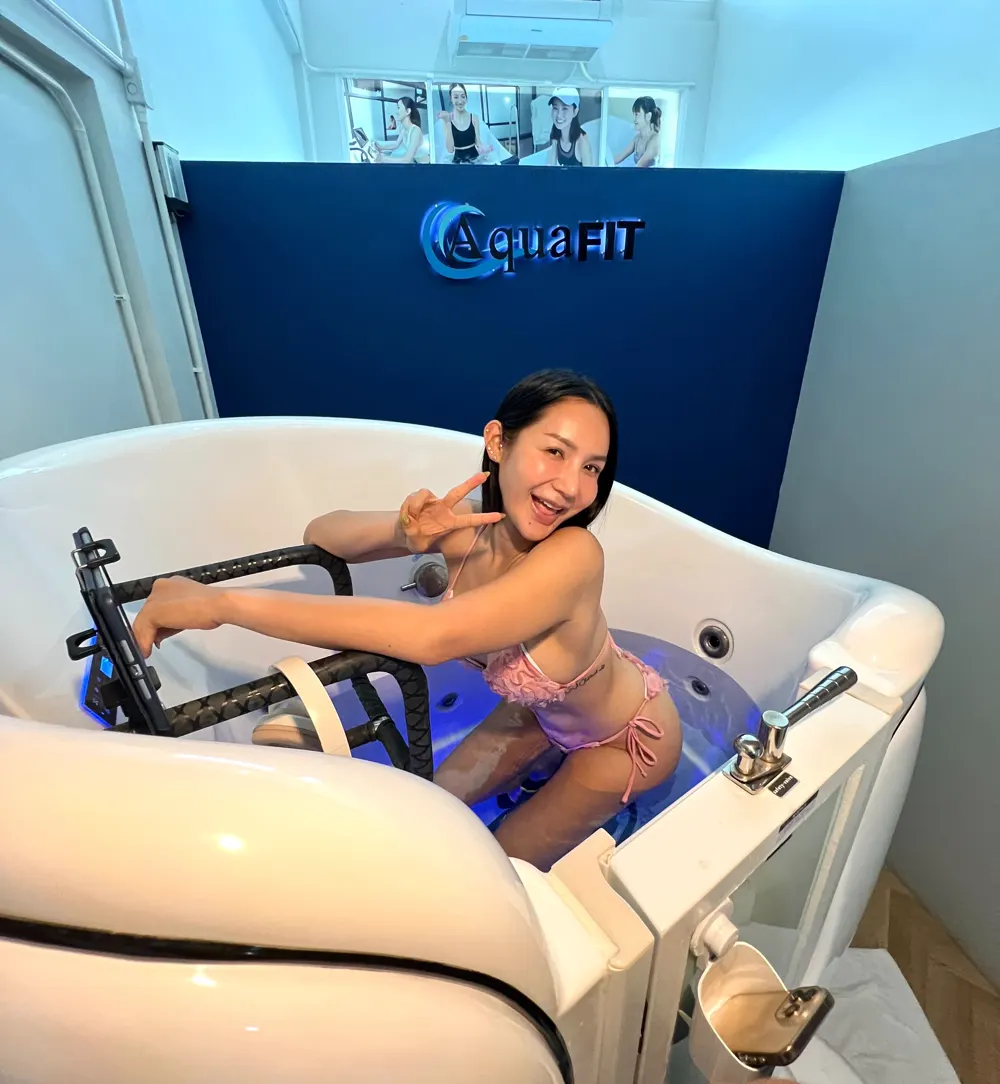
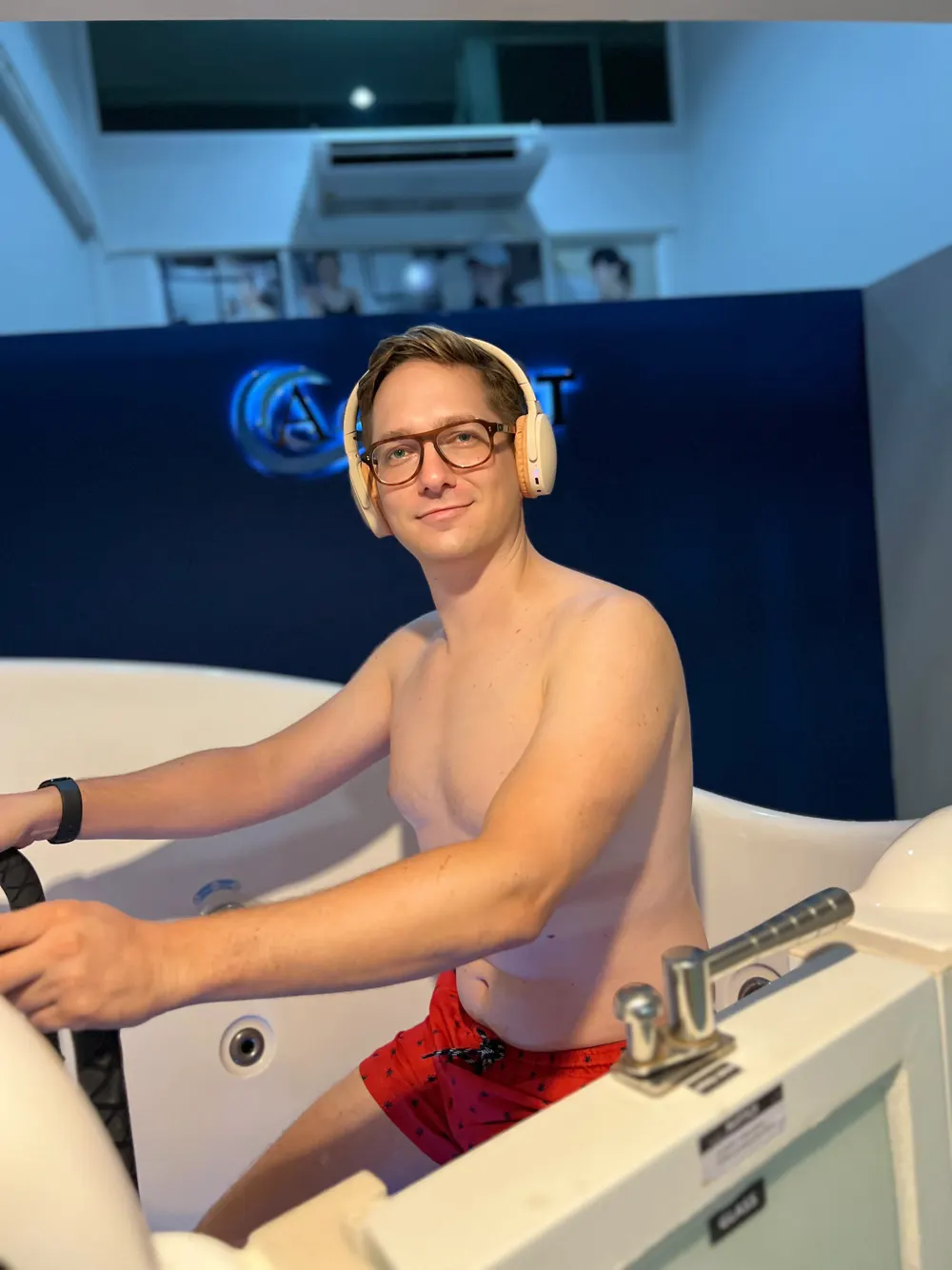
Aqua cycling (also called aquabiking) means pedalling an exercise bike while you sit in water up to your waist or chest, either in a pool class or in a private one-person tub. But does it really burn more calories than a normal bike? Is it easier on your knees? Here's what the research actually shows, with real numbers.
4.9 on Google Maps
The short answer
- Pedal for pedal, water is harder. Water pushes back on every stroke, so the same pace takes more effort than on a land bike.
- Your heart rate reads lower in water for the same work. So water can feel and look easier than it really is.
- A hard land ride can burn just as much. It just takes longer or a faster pace.
- The extra calories come mostly from carbohydrate, not fat.
- Water is kinder to sore joints. It supports part of your weight, and there's no pounding.
- Huge calorie claims (500–900 kcal per session) aren't backed by studies.
Aqua cycling calories burned: what the studies measured
Same pace: water wins
In a 2021 French study, 20 healthy young women did 30 minutes of cycling at the same pedalling speed (50 rpm) on land and in 27 °C water.[1] Researchers measured calories from the oxygen they breathed.
| 30 minutes at 50 rpm | Calories burned |
|---|---|
| Sitting still | 34 kcal |
| Land bike | 77 kcal |
| Aqua bike in 27 °C water | 137 kcal |
So at the same pace, water burned almost twice as much. Then the women rode on land at the same heart rate they had in the water. They needed about 44 minutes to burn what the water session burned in 30.[1]
Two important details:
- The extra energy came from carbohydrate. The body burned more carbohydrate in the water (0.71 g per minute vs 0.27 g on land). Fat use was about the same. So “aqua cycling burns more fat” isn't what this study found.[1]
- It didn't feel harder. On a standard 6–20 effort scale, the women rated the water session 9 and the land session about 11. The difference was small and could have been chance.[1]
Effort matters more than the water
That 137 kcal was a gentle session, at about 55% of the women's predicted maximum heart rate. In a second study by the same team[2], 11 young women rode for 40 minutes in a private tub at about 70% of their predicted maximum heart rate:
- In 27 °C water they burned about 290 kcal in 40 minutes.
- In cold 18 °C water they burned about 351 kcal.
Cold water made the body work harder to stay warm, yet riders rated it slightly easier by the end. Our tubs use warm water for comfort (around 27–40 °C), so we don't claim that cold-water bonus.
Hard effort
A 2022 study had 14 young women pedal in chest-deep 27 °C water for five minutes at each of four speeds.[3] At 50 pedal strokes a minute it counted as vigorous exercise. At 60, it was close to their maximum. Our rough estimate from their oxygen figures: a hard half hour at that level would burn roughly 300–370 kcal for a 65 kg person, but very few people can hold near-maximum effort for 30 minutes.
What does a land bike burn?
Harvard Health estimates that 30 minutes on a stationary bike at moderate effort burns about 210 kcal for a 57 kg person, 252 kcal at 70 kg and 294 kcal at 84 kg.[4] These are table estimates, not measurements, but they're in the same range as water.
About those 800-calorie claims
You'll find studios promising 500, 800, even 900 calories in a session. We haven't found a study that measured anything close to that.
To burn 800 kcal in 30 minutes, an average person would have to work flat out for the whole half hour, at roughly the output of a racing cyclist (our estimate). If a number sounds too good, ask where it came from.
Calories aren't the whole story anyway. Weight loss comes from regular exercise, sensible eating and tracking over weeks. Whether you enjoy it and keep coming back matters more than a few extra calories. (In the first study, riding in water didn't make the women eat more at lunch.[1])
Effort and heart rate
Water pushes back in every direction, on the downstroke and the upstroke. That's why the same pace costs more effort. As one of our Google reviewers put it: “It was tiring but not too strenuous, just right.”
Your heart rate in water also behaves differently.
In other words, for the same work your heart rate reads lower in water. Very warm water can push it back up. So land heart-rate zones don't carry over neatly. Go by feel: at moderate effort you can still talk in short sentences.
Joints: where water wins
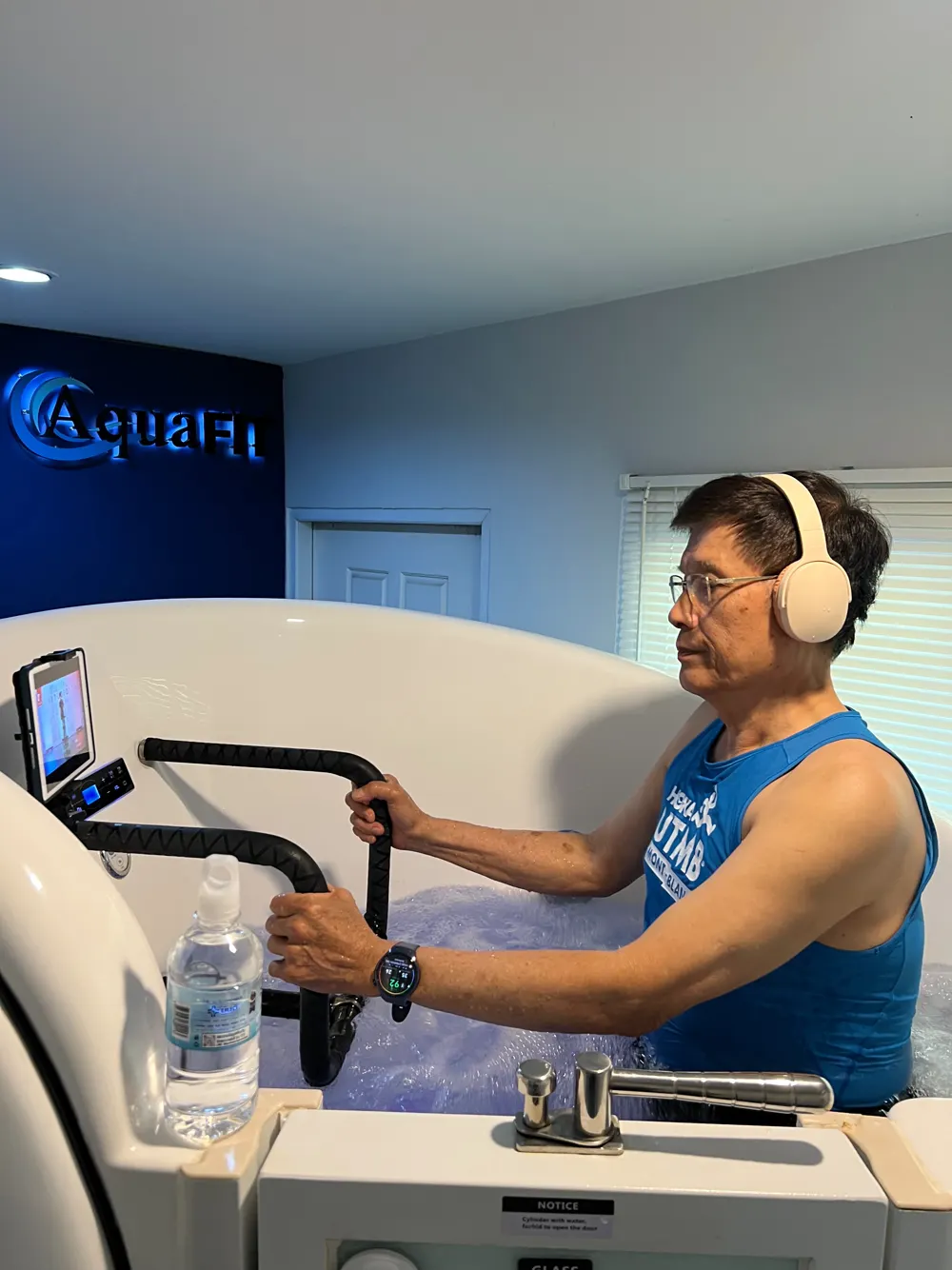
On land, your legs carry your full weight every time you push. In water, the water supports part of your weight and there's no pounding. Many people with sore knees or hips find it comfortable.
This has been studied: a 2020 study of 111 people with knee arthritis found that 12 weeks of aquatic cycling, twice a week, improved knee pain and function.[5] If that's you, read about low-impact exercise for sore knees and backs, or see the evidence in detail: aqua cycling for knee arthritis.
Side-by-side comparison
| Compared | Aqua cycling (private tub) | Regular cycling (land bike) |
|---|---|---|
| Calories, 30 min | ~130–350 kcal depending on effort | ~210–295 kcal at moderate effort (estimate) |
| At the same pace | Harder, more calories | Easier, fewer calories |
| At the same heart rate | More calories per minute (one study)[1] | Fewer per minute; ~14 min longer to match |
| Impact on joints | Very low; water supports part of your weight | Low (you sit), but no water support and full effort through the knees |
| How hard it feels | Often feels easier than it is | Feels about as hard as it is |
| Heart rate | Reads lower for the same work | Normal land zones apply |
| Muscles | Water resists both pushing and pulling | Mostly the push down |
| Heat and weather | Indoors in an air-conditioned studio, away from traffic and the midday heat | Outdoors: heat, rain, traffic, air quality |
| Privacy | Your own tub; nobody watching | Gym floor or road |
| Extras | Massage jets while you ride | — |
Who should pick which?
| Choose a regular bike if: | Choose aqua cycling if: |
|---|---|
|
|
Many people do both.
What about swimming?
Swimming is excellent exercise, and the water supports your whole body. But you need to be a confident swimmer to get a steady workout. Aqua cycling gives you the water's support while you sit, with no swimming at all.
Check with your doctor first if…
What riders say
“Excellent service and atmosphere. Perfect for burning calories. Really fun to train. Can speak English. Will come back for sure!”
“Cycling in the water is so refreshing and makes you sweat! It's fun every day.”
“My first experience with underwater sports was quite fun. The venue was clean and cozy, and the staff were gentle and friendly. It was a special experience, thank you.”
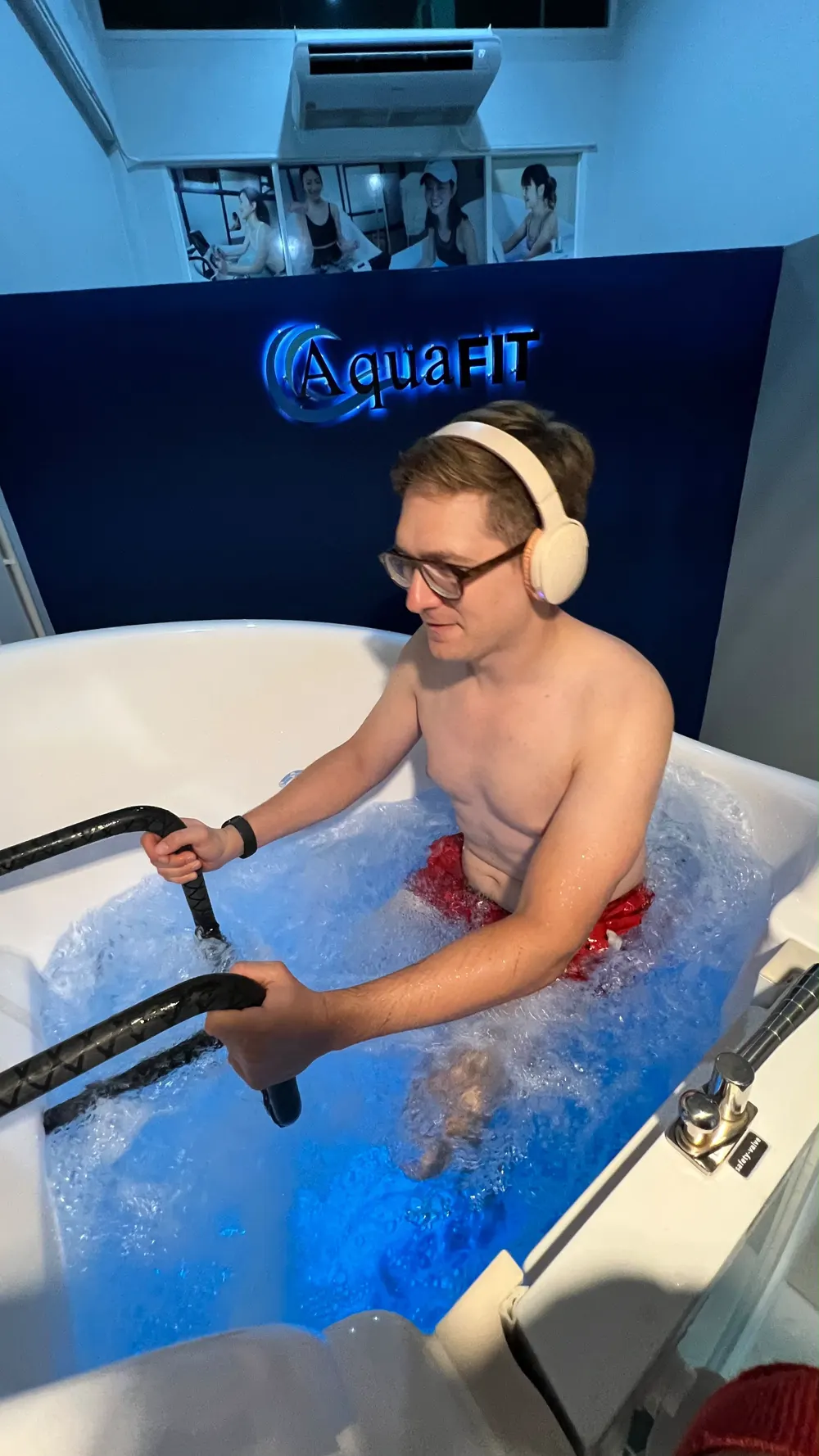
Try private aqua cycling in Chiang Mai
At AquaFIT Spabike Center in Chiang Mai, you ride in your own warm-water tub with massage jets, and the water is drained and replaced after every customer. Your first visit starts with a body composition scan. See our prices and packages.
Learn more about private aqua cycling. Plenty of parking.
Questions
Anything else? Message us on LINE – we reply in Thai or English.
How many calories does aqua cycling burn in 30 minutes?
Roughly 130–350 kcal, depending on how hard you work and your body size. A gentle 30-minute session in one study burned 137 kcal.[1]
Is aqua cycling better than a normal bike for weight loss?
Not by itself. It burns more per minute at the same pace, but a longer or harder land ride can burn just as much. The real advantage is comfort: if water lets you exercise more often without sore joints, that helps over time.
Does aqua cycling burn more fat?
The studies found the extra energy came from carbohydrate, not fat.[1] Fat loss depends on your overall habits, not the type of bike.
Is aqua cycling good for bad knees?
For many people, yes. Water supports part of your weight and there's no pounding, and aquatic cycling has been studied in people with knee arthritis. Check with your doctor or physio first if you're under care.
Sources
- Metz L. et al. (2021). Energy Intake and Appetite Sensations Responses to Aquatic Cycling in Healthy Women: The WatHealth Study. Nutrients.
- Metz L. et al. (2021). Cold-Water Effects on Energy Balance in Healthy Women During Aqua-Cycling. International Journal of Sport Nutrition and Exercise Metabolism.
- Demarie S. et al. (2022). Energy Consumption of Water Running and Cycling at Four Exercise Intensities. Sports.
- Calories burned in 30 minutes of leisure and routine activities. Harvard Health Publishing.
- Rewald S. et al. (2020). Aquatic Cycling Improves Knee Pain and Physical Functioning in Patients With Knee Osteoarthritis: A Randomized Controlled Trial. Archives of Physical Medicine and Rehabilitation.